San Francisco Bay Area / Retained by counsel & fiduciaries
Wires, shell entities, correspondent banks, blockchains — every hop leaves something behind. Chisholm Financial Investigations reconstructs that trail and puts it in a form that survives cross-examination.
Outbound wire from the victim or entity account.
Pass-through LLCs and nominee signatories.
Correspondent banking, records by request or subpoena.
Exchange deposit, off-ramp, or virtual asset provider.
Wallet cluster attributed, holder identified, exhibit prepared.
The situation
A controller resigns abruptly. A trustee can't explain a transfer. An elderly parent has sent seven wires to a company nobody has heard of. The pattern is almost always the same: the loss is discovered late, and the first accounts are already empty.
What matters then is how quickly someone can reconstruct where the funds actually went — not the first hop, which is easy, but the fourth and fifth, through the pass-through entities and the exchange accounts opened in someone else's name. That reconstruction determines whether there is anything left to recover, whether a claim can be proven, and whether the case is worth what it will cost to bring.
I spent more than two decades doing this work for the federal government, on cases where the analysis had to hold up in front of a jury. The method doesn't change in private practice. The client does.
About the firm
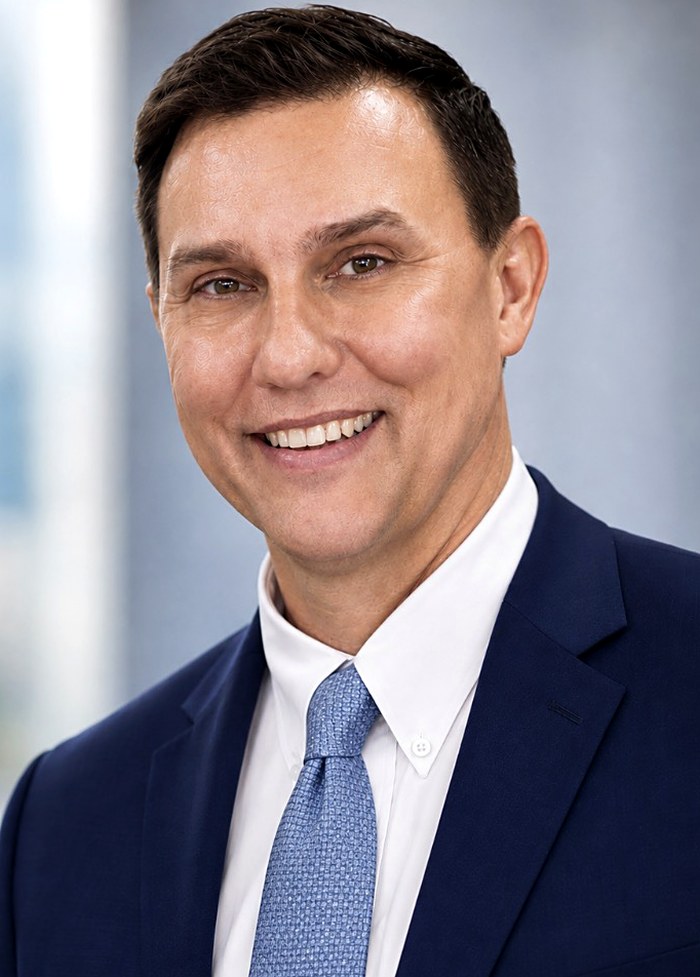
Chisholm Financial Investigations is a boutique forensic investigative practice. You work directly with me — there is no team of associates learning your case at your expense, and no conflicts bureaucracy between you and an engagement letter.
I spent more than 20 years as an FBI Special Agent in San Francisco working complex financial crime and cyber-enabled fraud. I led high-profile, multi-jurisdictional investigations, including undercover operations targeting criminal enterprises involved in money laundering and market manipulation. That work covered forensic accounting, cryptocurrency and blockchain analysis, and asset seizure and forfeiture, and I testified as a summary witness in numerous federal trials and grand jury proceedings.
I also served as an instructor for INTERPOL, training law enforcement partners across Southeast Asia and Africa on terrorist financing, elder fraud, and money laundering typologies. Teaching investigators from very different legal systems is good discipline — it forces you to explain a complicated financial trail simply, which is the same thing a jury needs from you.
Where a matter calls for capabilities outside my own — digital forensics imaging, economic damages, foreign-language document review — I say so and bring in a specialist rather than stretch. I'm based in the Bay Area, and when I'm not on a case I'm usually hiking or mountain biking somewhere with my family.
Services
Most engagements move through all three. Some stop after the first, because the answer to "can this be traced?" is sometimes no, and you should hear that early rather than late.
Establishing where funds and assets actually went, across institutions, entities, borders, and chains.
Reconstruction of transfers across bank, brokerage, payment processor, and entity records — including commingled accounts, round-tripping, and layered shell structures — into a single documented chain with a source cited for every figure. The output is built to be read by someone who is not an accountant: a judge, a board, or a jury.
On-chain tracing of transfers through wallets, mixers, bridges, and exchange deposits, with clustering and attribution work to tie addresses back to real people and companies. The on-chain analysis is only half of it — the value comes from joining it to the off-chain record: exchange KYC files, bank rails, and device or communications evidence.
Identifying real property, business interests, vehicles, accounts, and beneficial ownership held directly or through nominees and entities. Useful before you sue, before you settle, and before you spend money enforcing a judgment against someone who may have nothing collectible in their own name.
Corporate registrations and registered agents, UCC filings, civil and criminal dockets, bankruptcy proceedings, property records, regulatory and licensing files, and open-source research on individuals and counterparties. Often the fastest way to learn that the counterparty in your transaction has done this before.
Turning the analysis into findings, exhibits, and testimony that survive an adversary.
Embezzlement, vendor and procurement fraud, expense and payroll schemes, misappropriation by a fiduciary, and investment fraud. Includes document and records review, interviews of employees and third parties, and a written report of findings suitable for a board, an audit committee, an insurer, or a regulator.
Quantification of loss, tracing of proceeds through accounts and entities, reconciliation of what the books say against what the bank records show, and analysis of the internal control failures that let the scheme run as long as it did. Findings are tied to source documents so opposing counsel can check them — which is the point.
Summary charts, flow-of-funds diagrams, timelines, and transaction schedules built for use at deposition, hearing, mediation, or trial. Preparing summary evidence for federal juries was a routine part of my prior work, and the discipline it teaches is that a chart nobody can follow is worse than no chart.
Available as a consulting expert or, where appropriate, to testify on financial analysis, tracing methodology, and investigative process. I have testified as a summary witness in numerous federal trials and before grand juries. I will also tell you when my findings do not support the theory of the case, before you are in front of a judge.
Supporting the effort to get funds back — and closing the gap that let them go.
Preparing the financial analysis and supporting documentation counsel needs for freezing orders, writs of attachment, and referrals where a parallel criminal forfeiture may be available. Asset seizure and forfeiture was a core part of my federal practice, including identifying what is traceable to the offense and what is not.
Assembling the loss documentation behind a restitution request or a proof of loss under fidelity, commercial crime, D&O, or cyber coverage. Claims frequently fail on documentation rather than on the merits — the loss was real, but the file did not establish it in the form the carrier required.
Organizing a matter into a form a federal or state agency can actually act on, and setting realistic expectations about what a referral will and will not do for a civil recovery. Having sat on the receiving end of these for two decades, I can tell you fairly quickly whether a case is likely to be worked.
Red-flag reviews of payment and onboarding controls after an incident, and instructor-led training on money laundering typologies, elder financial exploitation, terrorist financing, and fraud indicators — the same subjects I taught for INTERPOL to law enforcement partners in Southeast Asia and Africa, adapted for compliance, finance, and front-line staff.
How an engagement runs
Financial investigations get expensive when nobody defines the question. Each stage ends at a decision point, where you choose whether the next one is worth it.
A confidential call on the facts, the timeline, and any conflicts.
What records exist, what the analysis can prove, and an estimate.
Records reconstruction, on-chain tracing, interviews, and research.
A written report with exhibits and a source cited for every figure.
Support through deposition, hearing, or trial as needed.
Representative matters
Multi-jurisdictional investigations of criminal enterprises moving proceeds through pass-through companies, nominee owners, and correspondent banking relationships, including undercover work directed at the organizers rather than the couriers.
Schemes built on coordinated trading, promotional activity, and misrepresentation, requiring reconstruction of trading and banking records to show who directed the activity and who was paid.
Business email compromise, investment fraud, and theft of digital assets, traced from the initial wire or transfer through conversion points to the accounts and wallets where value came to rest.
Romance, tech-support, and trusted-fiduciary schemes against older victims, where the money moves fast, the reporting comes late, and recovery depends on how quickly the first accounts can be identified.
These describe categories of work performed during federal service and in private practice. They contain no client, victim, or case-identifying information, and nothing here is a representation about any specific matter or its outcome.
Insights
Short pieces on financial-crime typologies for counsel, compliance teams, and families dealing with a loss.
On-chain analysis shows that value moved. It does not, by itself, show who moved it. Where attribution comes from, and where it breaks down under cross-examination.
Read the article → Fraud preventionThe characteristics that recur across pass-through entities — formation timing, addresses, and changed payment instructions — and what to check before the payment goes out.
Read the article → Elder fraudThe gap between the first wire and the first call to anyone who can help, and what a family can do inside that window.
Read the article →Who retains us
Contact
Tell me what happened and roughly what's at stake. I'll tell you honestly whether the money can likely be traced, and what it would take.